PCB board knowledge and standards
At present, there are several types of copper-clad laminates widely used in my country, and their characteristics are as follows: types of copper-clad laminates, knowledge of copper-clad laminates, and classification methods of copper-clad laminates. Generally, according to the different reinforcing materials of the board, it can be divided into five categories: paper base, glass fiber cloth base, composite base (CEM series), laminated multi-layer board base and special material base (ceramic, metal core base, etc.). If it is classified according to the resin adhesive used in the board, the common paper-based CCI. There are: phenolic resin (XPc.XxxPC, FR-1, FR-2, etc.), epoxy resin (FE-3), polyester resin and other types. The common glass fiber cloth base CCL has epoxy resin (FR-4, FR-5), which is currently the most widely used type of glass fiber cloth base. In addition, there are other special resins (glass fiber cloth, polyamide fiber, non-woven fabric, etc. as additional materials): bismaleimide modified triazine resin (BT), polyimide resin (PI) , Diphenylene ether resin (PPO), maleic anhydride imine-styrene resin (MS), polycyanate resin, polyolefin resin, etc. According to the flame retardant performance of CCL, it can be divided into two types of boards: flame retardant (L94-VO, UL94-V1) and non-flame retardant (UL94-HB). In the past one or two years, with more emphasis on environmental protection, a new type of CCL that does not contain bromine has been separated from the flame-retardant CCL, which can be called "green flame-retardant CCL". With the rapid development of electronic product technology, there are higher performance requirements for cCL. Therefore, from the performance classification of CCL, it is divided into general performance CCL, low dielectric constant CCL, high heat resistance CCL (generally the L of the board is above 150C), and low thermal expansion coefficient CCL (generally used on the packaging substrate) and other types. With the development and continuous progress of electronic technology, new requirements are constantly put forward for printed board substrate materials, thereby promoting the continuous development of copper clad laminate standards.
At present, the main standards of substrate materials are as follows
National standards: my country's national standards related to substrate materials include GB/T4721-47221992 and GB4723-4725-1992. The standard for copper clad laminates in Taiwan, China is the CNS standard, which was formulated based on the Japanese Sichuan s standard and was established in 1983. release.
②International standards: Japanese JIS standard, American ASTM, NEMA, MIL, IPc, ANSI, UL standard, British Bs standard, German DIN, VDE standard, French NFC, UTE standard, Canadian CSA standard, Australian standard AS standard, FOCT standard of the former Soviet Union, international IEC standard, etc.; suppliers of PCB design materials are common and frequently used: Shengyi\Kingboard\International, etc.
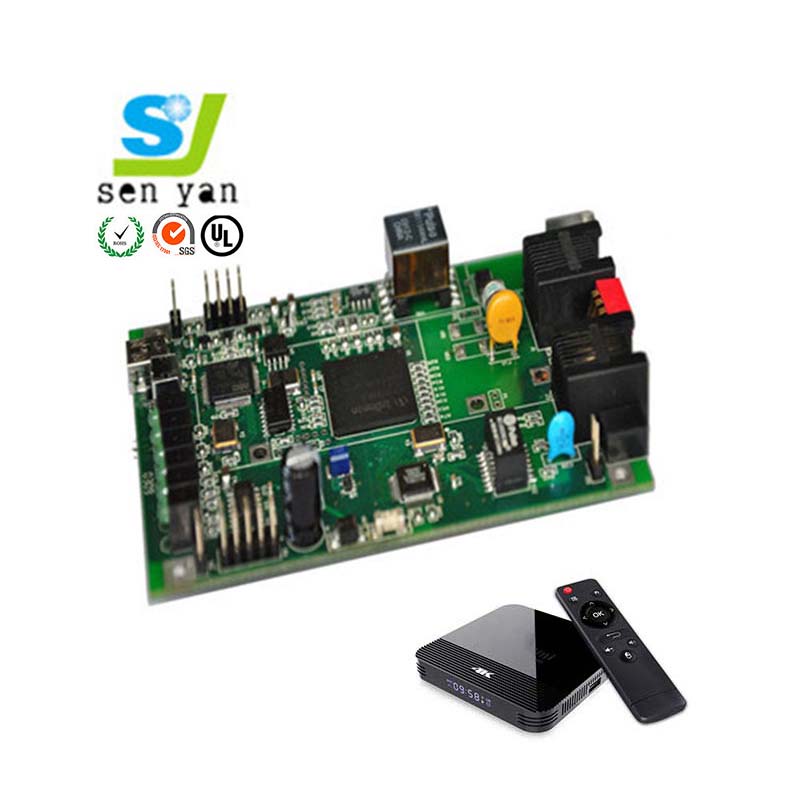
PCB circuit board material introduction: according to the brand quality level from bottom to high, it is divided as follows: 94HB -94VO - CEM-1 - CEM-3-FR-4
The detailed parameters and usage are as follows:
94HB: Ordinary cardboard, not fireproof (lowest grade material, die punching, not suitable for power board)
94v0: flame retardant cardboard (die punching)
22F: Single-sided half glass fiber board (die punching)
CEM-1: Single-sided glass fiber board (must be drilled by computer, not in the mold)
CEM-3: Double-sided semi-fiberglass board (except for double-sided cardboard, which is the lowest-end material for double-sided panels. Simple double-sided panels can use this material, which is 5~10 yuan/square meter cheaper than FR-4) FR-4: Double-sided fiberglass board
1. The classification of flame retardant properties can be divided into four types: 94vo - v-1 -v-2 - 94HB
2. Prepreg: 1080=0.0712mm, 2116=0.1143mm, 7628=0.1778mm3.FR4 CEM-3 is the plate, fr4 is the glass fiber board, cem3 is the composite substrate
4. Halogen-free refers to the base material that does not contain halogen (fluorine, bromine, iodine and other elements), because bromine will produce toxic gas when burned, which is required by environmental protection.
5. Tg is the glass transition temperature, that is, the melting point.
6. The circuit board must be flame-resistant, it cannot burn at a certain temperature, it can only soften. The temperature point at this time is called the glass transition temperature (Tg point), and this value is related to the dimensional durability of the PCB board.
What is high Tg? PCB circuit board and the advantages of using high Tg PCB:
When the temperature of a high Tg printed circuit board rises to a certain threshold, the substrate will change from a "glass state" to a "rubber state". The temperature at this time is called the glass transition temperature (Tg) of the board. That is, Tg is the highest temperature (C) at which the substrate remains rigid. That is to say, ordinary PCB substrate materials will continue to soften, deform, melt, etc. at high temperatures, and also show a sharp decline in mechanical and electrical characteristics, which will affect the service life of the product. Generally, the Tg plate is 130C Above, the high Tg is generally greater than 170°C, and the medium Ig is greater than 150°C; usually the PCB printed board with Tg≥170°C is called a high Tg printed board; the Tg of the substrate is increased, and the heat resistance of the printed board, Features such as moisture resistance, chemical resistance, and stability are all enhanced and improved. The higher the TG value, the better the temperature resistance of the board, especially in the lead-free process, the application of high Tg is more; high Tg refers to high heat resistance. With the rapid development of the electronics industry, especially electronic products represented by computers, are developing towards high functionality and high multi-layers, which requires higher heat resistance of PCB substrate materials as a prerequisite. The emergence and development of high-density mounting technologies represented by SMT and CMT have made PCB more and more inseparable from the support of high heat resistance of the substrate in terms of small aperture, fine line, and thinning.
Therefore, the difference between general FR-4 and high Tg: at high temperature, especially under heat after moisture absorption, the mechanical strength, dimensional stability, adhesiveness, water absorption, thermal decomposition, thermal expansion, etc. of the material are different. There are differences between the two situations, and high Tg products are obviously better than ordinary PCB substrate materials.